

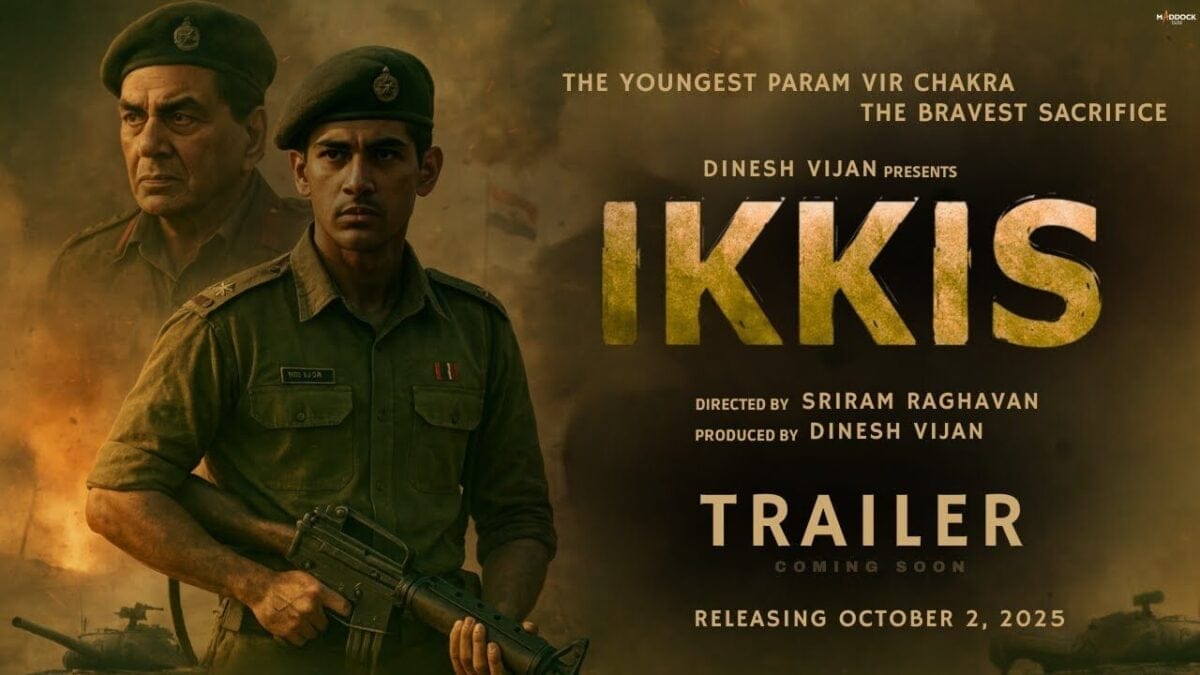
By Anil Merani: I have a fundamental issue with Agastya Nanda’s upcoming film Ikkis: specifically, its portrayal of war as inherently evil and the nation as secondary, which oversimplifies complex issues.
The director( Sriram Raghavan) attempts to humanize the enemy, as exemplified by Brigadier Khwaja Mohammed Naseer( Jahdep Ahlawat’s) portrayal of Pakistan, but this risks diluting the reality of conflict.
When the 1971 war was first referred to, they merely said the situation in East Pakistan (Now Bangladesh) was bad; they did not tell about the rape and murder of Bengali Muslims by Urdu speakers (Op Searchlight and what led to it), which forced India to intervene.
And when they showed Dharamji’s character (ML Khetrapal) visiting Pakistan in 2001, they did not mention the terror attacks in Parliament and the Srinagar Assembly. They mentioned Kargil, but no mention of what happened to Major Saurabh Kalia and IC 814.
And what was really shocking was that MJ Khetrapal( Dharamji) could genuinely forgive his son’s (killein action agreed), but I don’t think most humans or faujis would show such compassion (read online version, it did happen)
Interestingly, the makers correctly made Agastaya (PVC winner, Arun Khetrapal.) look brave and ready to die for the flag (and do it). Playing Polo in Lahore was another dig at war.
My problem is that you want to whitewash a state that has thrown everything at us except the kitchen sink to get Kashmir. (Operation Topaz and Bleed India by a thousand cuts) You might say war is bad, but about ordinary civilians who have kept dying at the hands of terrorists since 1989 (Mumbai has been repeatedly attacked, did Mumabikars sign up?)
War is not automatic; it happens when people take specific actions leading to retaliation. Recognizing this complexity can help the audience appreciate the nuanced realities behind conflicts, rather than simplified narratives.
At the end, I do concede that war should be off the table because it leads to mass destruction. But I also believe the international community, like the UN, should pressure Pakistan to end terror, which requires heavy compromise from India. This can inspire hope for constructive change if we acknowledge the ongoing challenges honestly.
Ikkis seem a counter-response to Dhurandar, which only speaks of muscular action against Pakistan (sans nuance again)
The janta has loved the former (1100 crores and counting) the peaceniks will hope for a similar response to Ikkis as well, over to the paying public.
PS Ikkiis is mainly based on fact (the war account, the bravery), the above political angle was added in dialogue giving it another angle
I have an issue with the ideological interpretation, not the valour of the fallen Jai Hind.

